this
is
Genocide
this is
Genocide
The intentional destruction of a group of people. Israeli officials declared their plans at the start. Leading scholars confirmed it. Over 70,000 people murdered. Over 50,000 children killed or injured. Over 39,000 have lost at least one parent. More than 90% of all structures destroyed. Starvation used as a weapon of war. Schools, hospitals, and essential infrastructure obliterated. A genocide live streamed for more than 2 years.
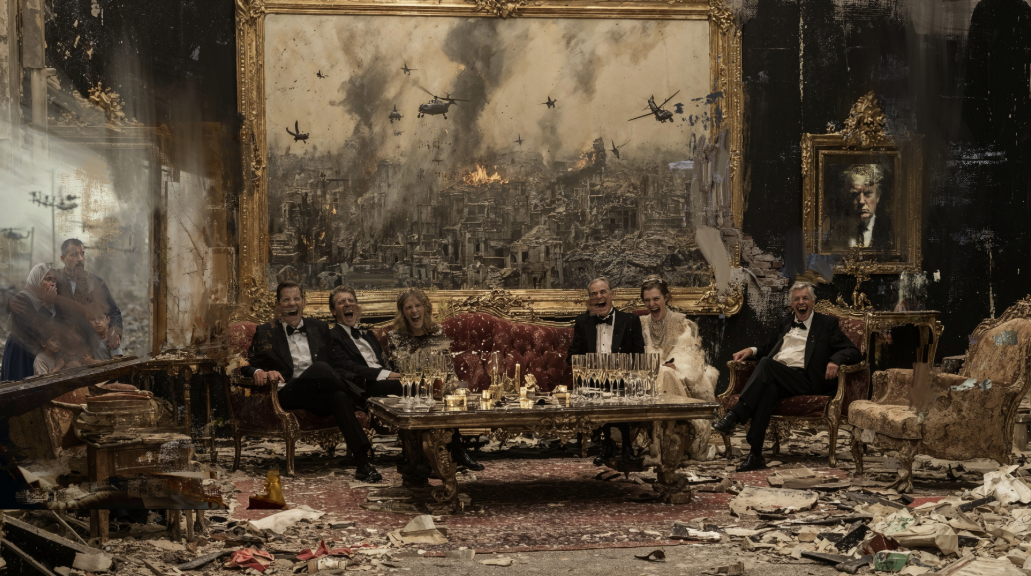
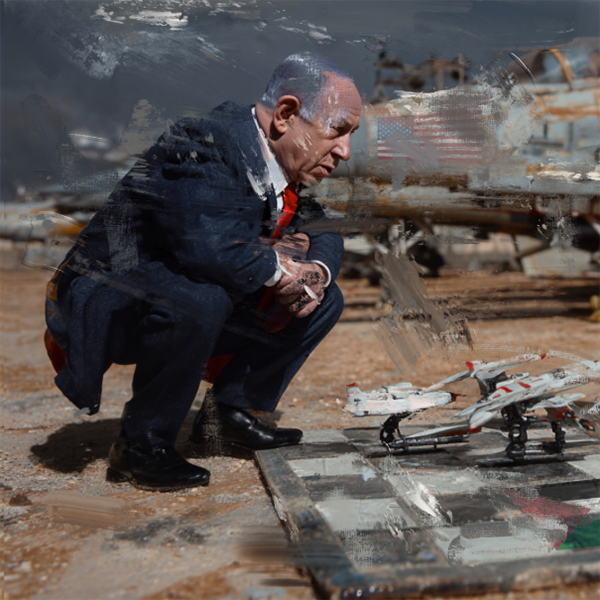
Norman Harman is a Scottish artist and early pioneer of POSTPAINTING — a practice that collides analogue painting with AI and digital systems to probe distortion, control, and aesthetic entropy in the 21st century.
Born in Edinburgh, Harman trained in Painting at Edinburgh College of Art (1997–2001), where he received the RSA Latimer Painting Prize. His work begins where signals break down: overpainted digital images are fractured, glitched, and rebuilt by hand — painterly reconstructions of corrupted data that hover between figuration and abstraction, reality and simulation.
Recent projects include Android Plaza and LOWEKCHO, an expansive ongoing series chronicling a fictional dystopia consumed by biotech, ecological collapse, and late-capitalist absurdity. Fusing AI-generated world-building with digital painting, the series is released as 1/1 NFTs on-chain.
His digital paintings have recently been exhibited in Berlin, London, and Paris, including Paris Photo 2025 with L'Avant Galerie Vossen.
Harman has also collaborated with Irvine Welsh on a cinematic short for Message From The Skies (Edinburgh), and is one half of The Last Confirmation, an ongoing crypto art duo with Robness. His work is collected across both traditional and blockchain-native contexts, placing him in the first wave of artists using Web3 to reinvent how art is made, distributed, and preserved.

mp4, 3840 x 2160 px4 minutes 23 seconds 2026
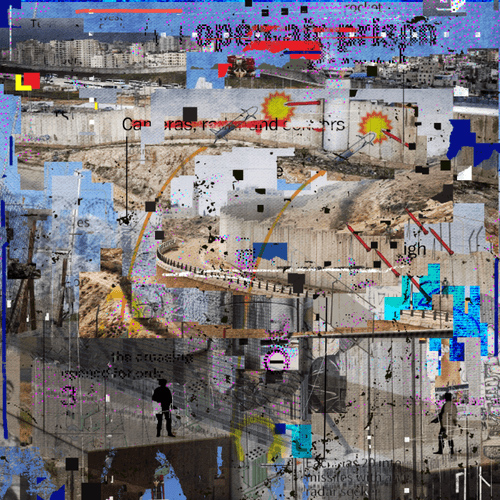
Gaussian splat 3D model derived from drone footage of Gaza taken between 2019-2021, photographed in Blender. Text adapted from "Funes the Memorious" by Jorge Luis Borges.
Soundtrack: “Sadness Oud” from The Classical Oud, Vol.5, released by Rock Records.
Sabato Visconti is a Brazilian-born multimedia artist based in Western Massachusetts. Their work interrogates contemporary and historical digital imaging practices by engaging with the underlying materialities of media production and online distribution. From pixels to glitches, video game errors to AI hallucinations, these visual liminalities serve as foundations for world-building and story-telling. As part of a Brazilian Diaspora, Sabato draws on cultural histories, natural ecologies,and politics to portray subjects and their environments, often entangled in systems designed to fail or malfunction.
Sabato works have been exhibited throughout the world, notably at the Museum of the Moving Image, ICA Boston, and Tate Britain; their works have also been published in Time Magazine, Vogue, and the Wall Street Journal.

Gif, 736 x 566 px x 2(2024)//
As of 2024, there are three entry points into Gaza. The Rafah Crossing Point is the only one of the three that borders Egypt and isn't under direct Israeli control, making it a flashpoint for the current blockade of movement in and out of Gaza. Of the three entrances, the Rafah Crossing is the most ornate. It was built with the presumption of a State, though today it threatens to become a cruel valve for the mass displacement of an entire people.
//Special edition for #tez4pal --Primary sales will benefit INARA (International Network for Aid, Relief, and Assistance), helping them provide medical assistance, mental health support, and emergency evacuations to children in Gaza.
//> Created in Deluxe Paint IV on an emulated Amiga A1200 computer.
Sabato Visconti is a Brazilian-born multimedia artist based in Western Massachusetts. Their work interrogates contemporary and historical digital imaging practices by engaging with the underlying materialities of media production and online distribution. From pixels to glitches, video game errors to AI hallucinations, these visual liminalities serve as foundations for world-building and story-telling. As part of a Brazilian Diaspora, Sabato draws on cultural histories, natural ecologies,and politics to portray subjects and their environments, often entangled in systems designed to fail or malfunction.
Sabato works have been exhibited throughout the world, notably at the Museum of the Moving Image, ICA Boston, and Tate Britain; their works have also been published in Time Magazine, Vogue, and the Wall Street Journal.

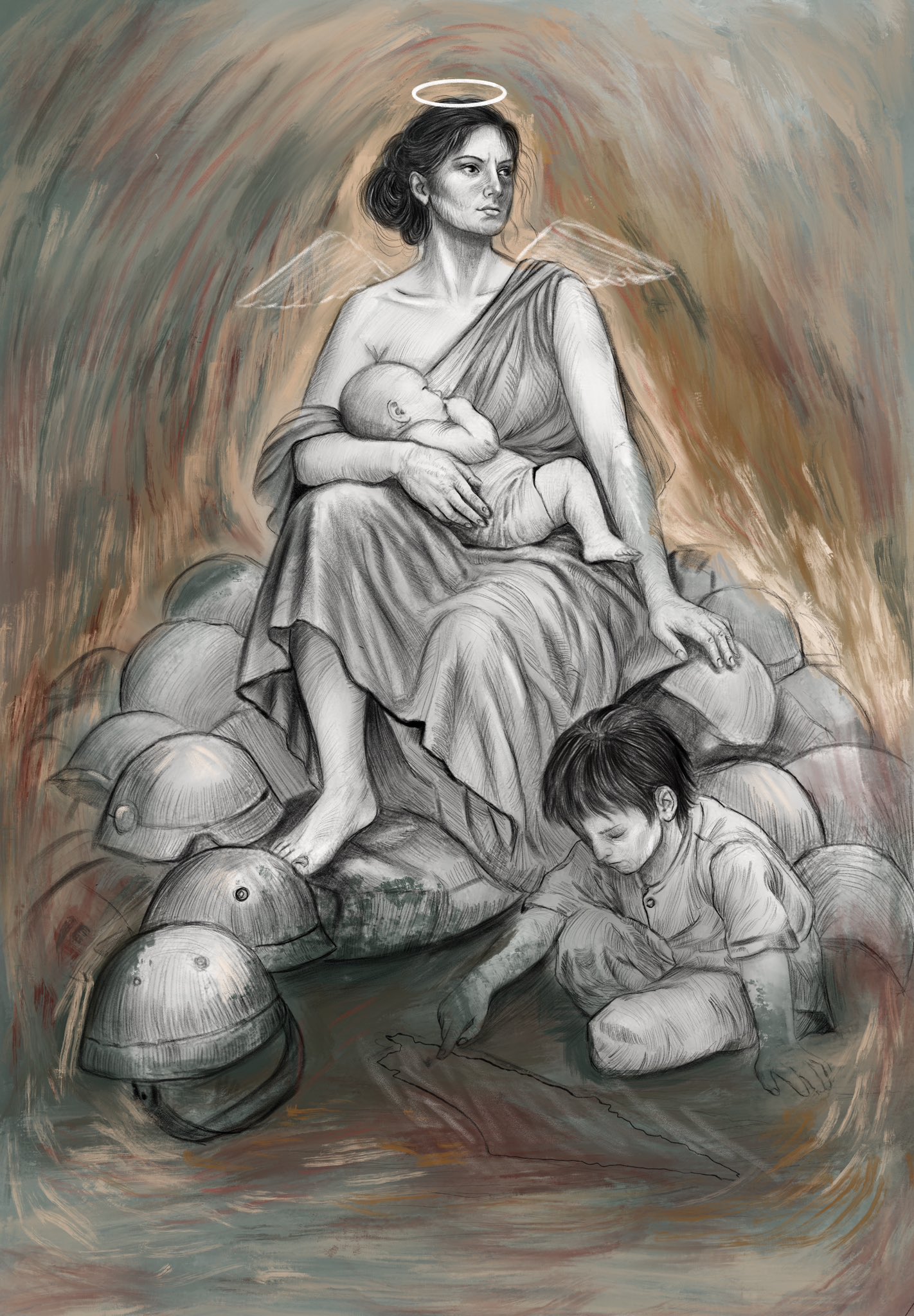
Created in response to the suffering of children in Gaza, this work reflects the fragile space between innocence and survival. A mother figure sits among war helmets while holding a child, as another quietly draws beside her — preserving imagination in the middle of devastation. The piece speaks about protection, loss, and the quiet endurance of human tenderness during war.
Maryam Hassani is a visual artist, illustrator, and art educator based in Dubai. Her work explores memory, displacement, war, and emotional resilience through symbolic figurative imagery and poetic visual storytelling. Combining graphite drawing with painterly textures, she creates intimate worlds shaped by silence, mythology, and human fragility. Her works have been exhibited internationally across both physical and digital art spaces.
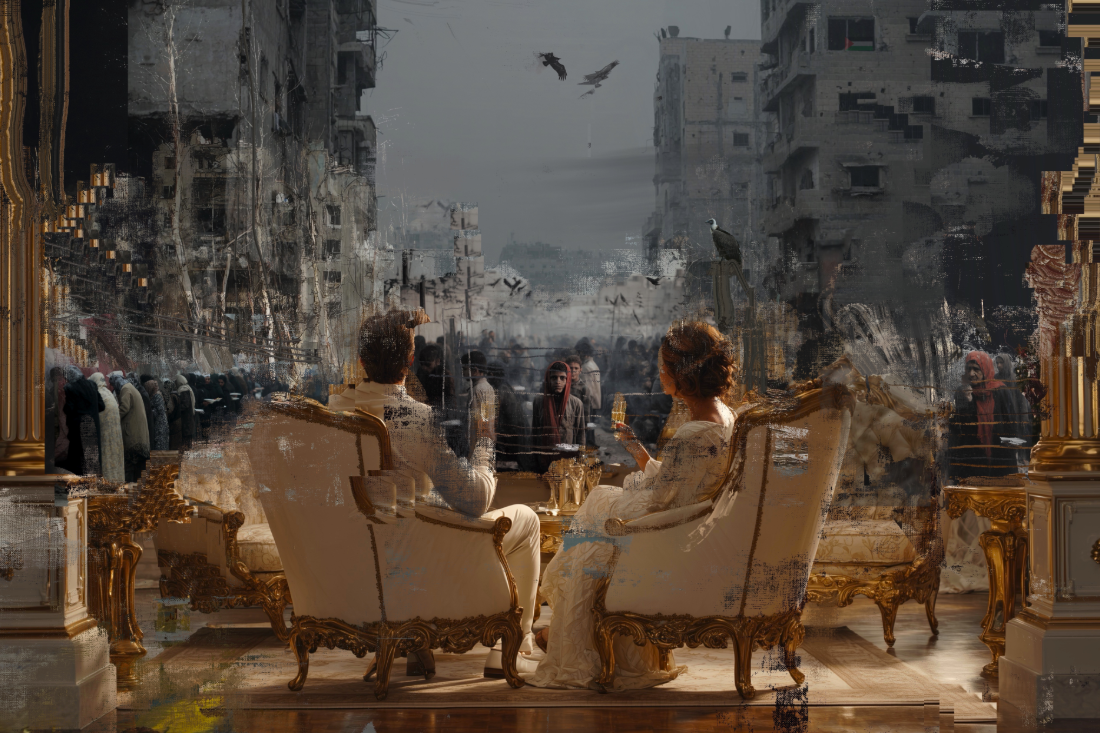
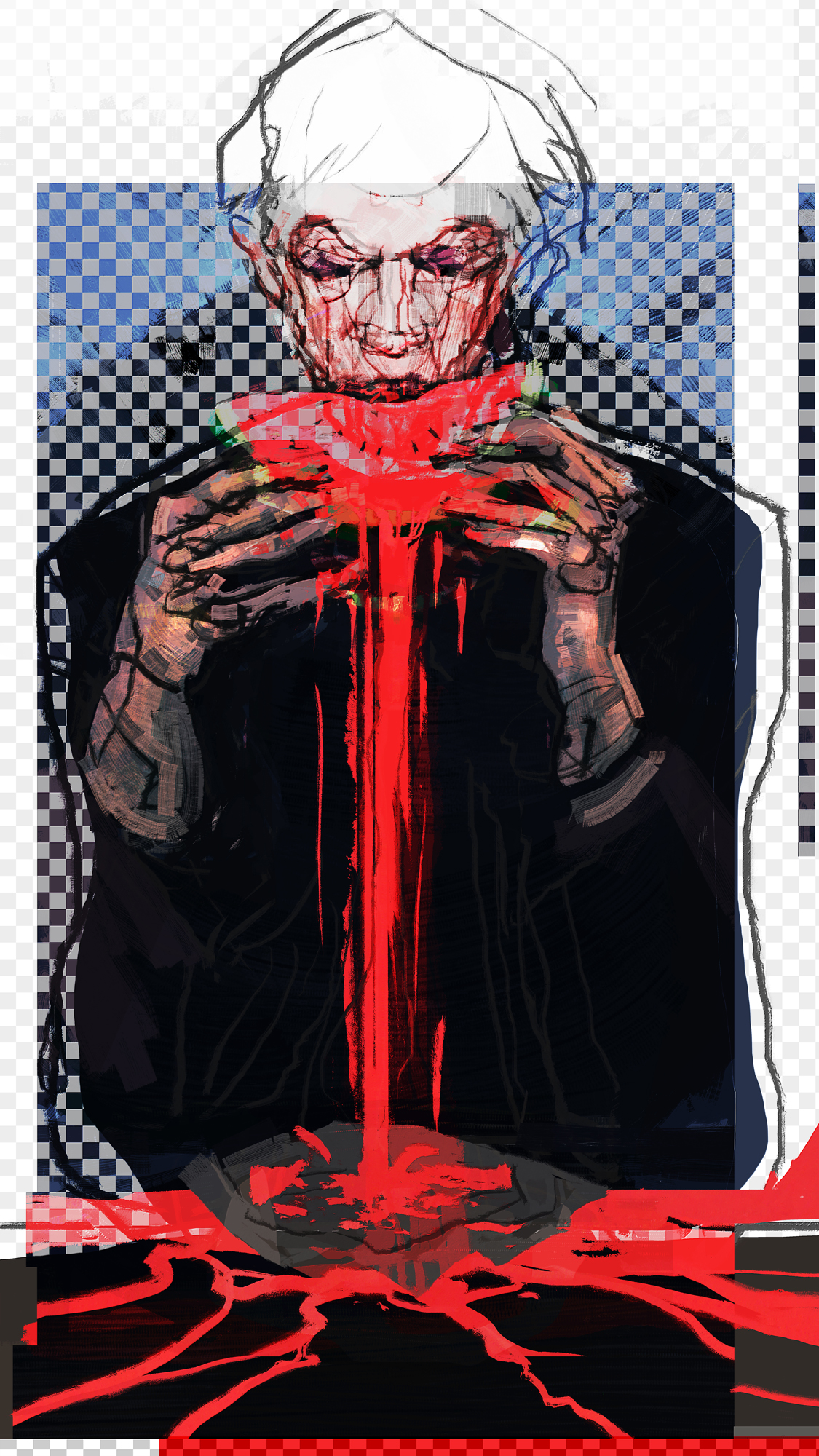
Norman Harman is a Scottish artist and early pioneer of POSTPAINTING — a practice that collides analogue painting with AI and digital systems to probe distortion, control, and aesthetic entropy in the 21st century.
Born in Edinburgh, Harman trained in Painting at Edinburgh College of Art (1997–2001), where he received the RSA Latimer Painting Prize. His work begins where signals break down: overpainted digital images are fractured, glitched, and rebuilt by hand — painterly reconstructions of corrupted data that hover between figuration and abstraction, reality and simulation.
Recent projects include Android Plaza and LOWEKCHO, an expansive ongoing series chronicling a fictional dystopia consumed by biotech, ecological collapse, and late-capitalist absurdity. Fusing AI-generated world-building with digital painting, the series is released as 1/1 NFTs on-chain.
His digital paintings have recently been exhibited in Berlin, London, and Paris, including Paris Photo 2025 with L'Avant Galerie Vossen.
Harman has also collaborated with Irvine Welsh on a cinematic short for Message From The Skies (Edinburgh), and is one half of The Last Confirmation, an ongoing crypto art duo with Robness. His work is collected across both traditional and blockchain-native contexts, placing him in the first wave of artists using Web3 to reinvent how art is made, distributed, and preserved.
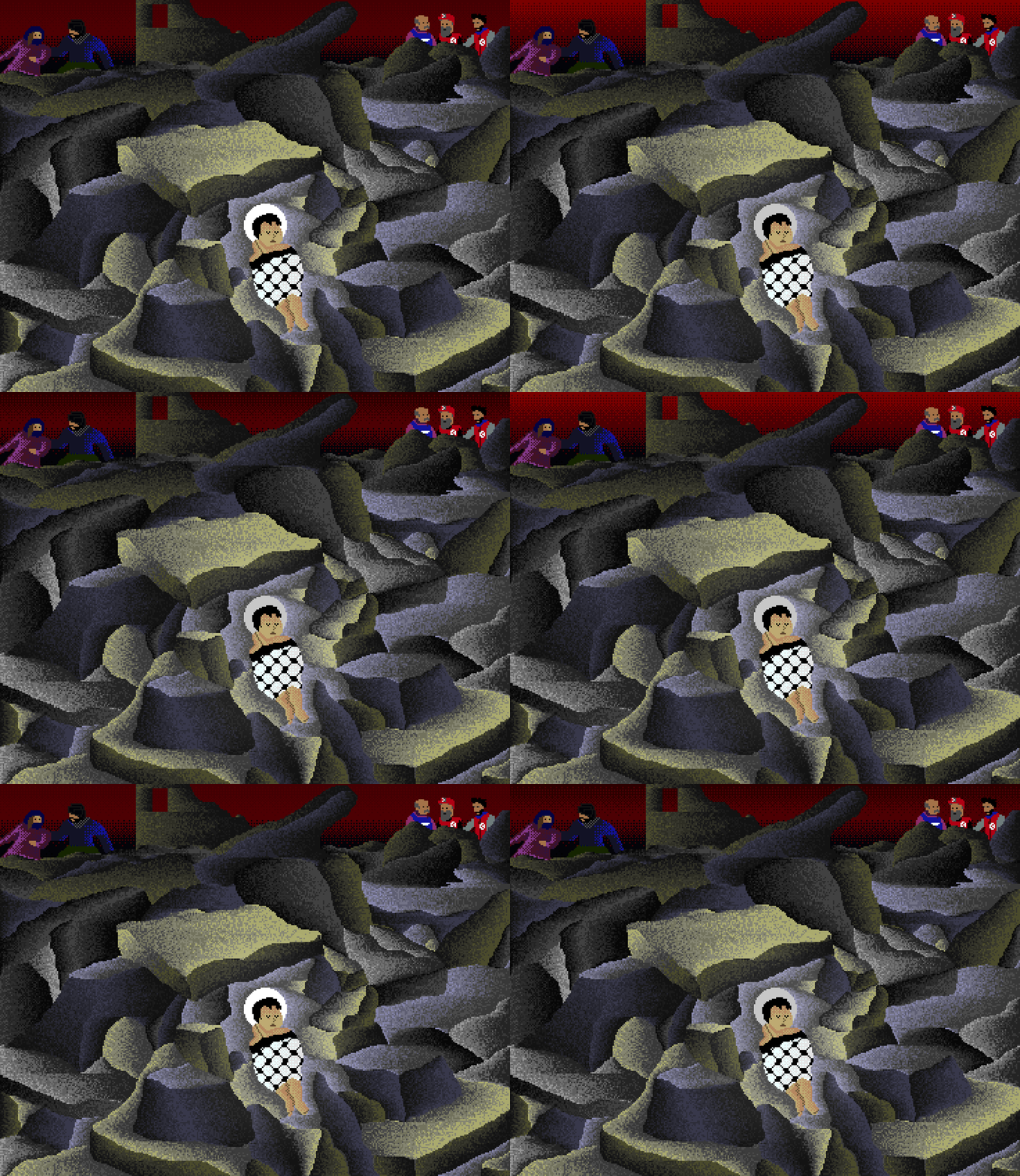
Gif, 736 x 566 px x 2(2023)//
Based on the crèche at the Lutheran Christmas Church in Bethlehem, in the Occupied West Bank.From a NYT article about the crèche:“We’ve been glued to our screens, seeing children pulled from under the rubble day after day. We’re broken by these images,” said the Rev. Munther Ishaq, who created the crèche. “God is under the rubble in Gaza, this is where we find God right now.”
//> Created in Deluxe Paint IV on an emulated Amiga A1200 computer.
Sabato Visconti is a Brazilian-born multimedia artist based in Western Massachusetts. Their work interrogates contemporary and historical digital imaging practices by engaging with the underlying materialities of media production and online distribution. From pixels to glitches, video game errors to AI hallucinations, these visual liminalities serve as foundations for world-building and story-telling. As part of a Brazilian Diaspora, Sabato draws on cultural histories, natural ecologies,and politics to portray subjects and their environments, often entangled in systems designed to fail or malfunction.
Sabato works have been exhibited throughout the world, notably at the Museum of the Moving Image, ICA Boston, and Tate Britain; their works have also been published in Time Magazine, Vogue, and the Wall Street Journal.
Sourced from news articles of various sources, including ABC News, AA News, Al Jazeera, Amnesty International, Associated Press, ASFC News, BBC, Channel News Asia, CNN, Deutsche Welle, Doctors Without Borders, EuroNews, Israel Nation News, Jamaica Observer, Justice Info, Lemonde, Los Angeles Times, Mondoweiss, MSN News, New Arab, New Yorker, Prism Reports, SciDevNet, Telegraph, The Conversation, The Guardian, The Moscow Times, The New Humanitarian, The New York Times, 972 Mag, WTTW and United Nation News, from October 7 2023 to September 15 2025. Video with sound, 1920x1080, 1m38s. Inspired on the work of Yoshinao Satoh.