this
is
A Colonial Peace
this is
A Colonial Peace
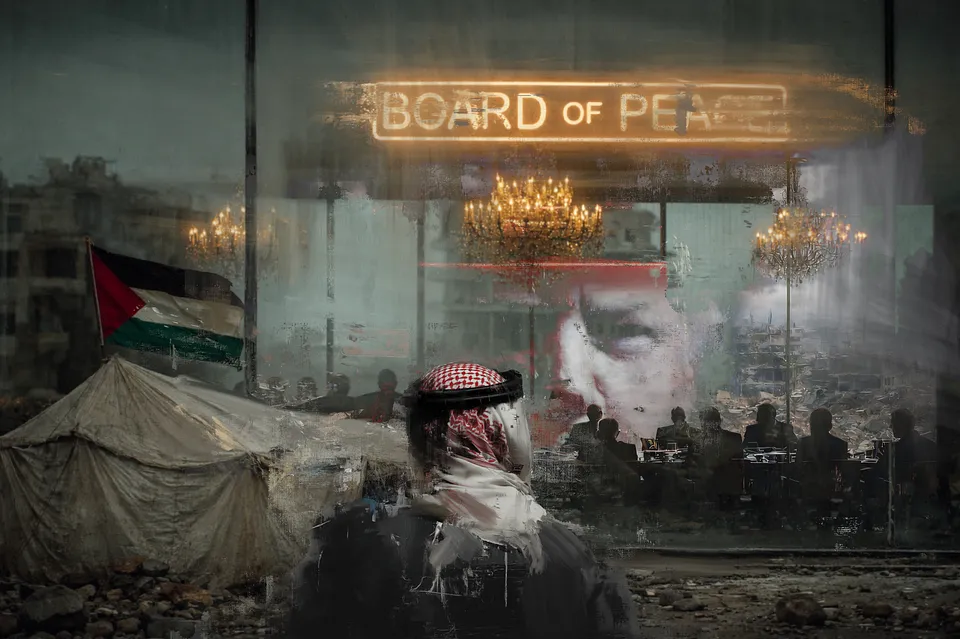
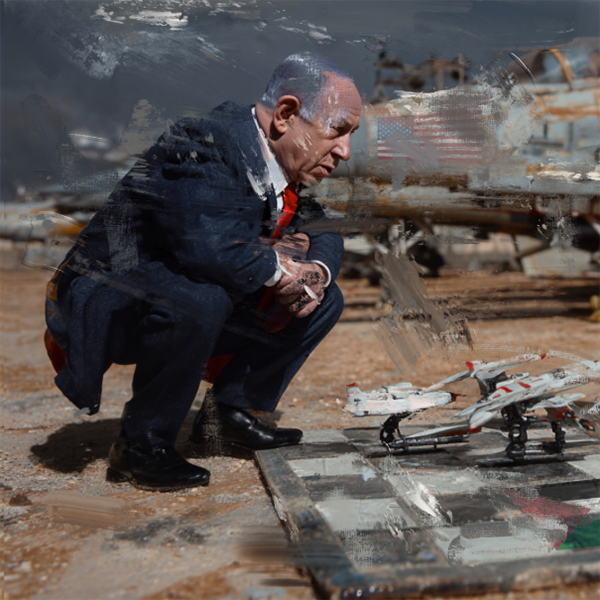
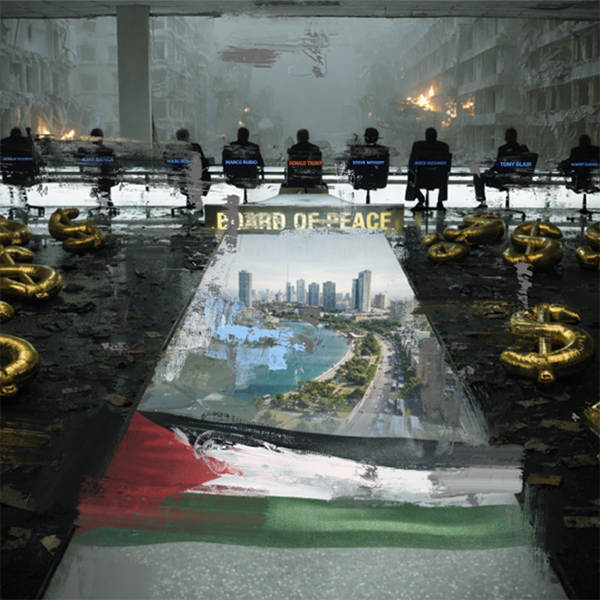
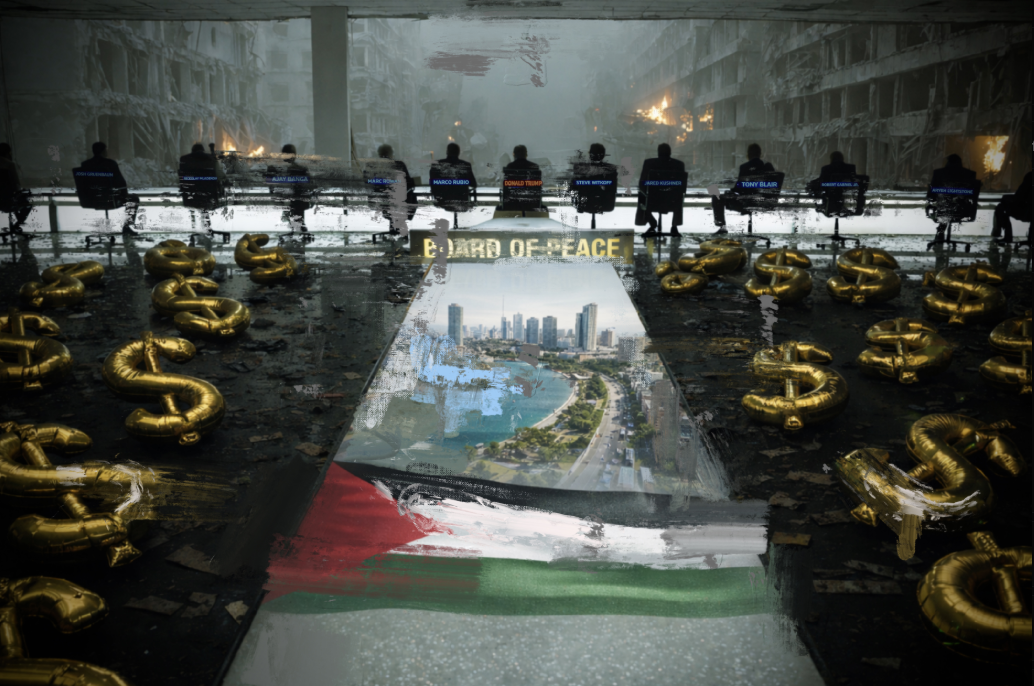
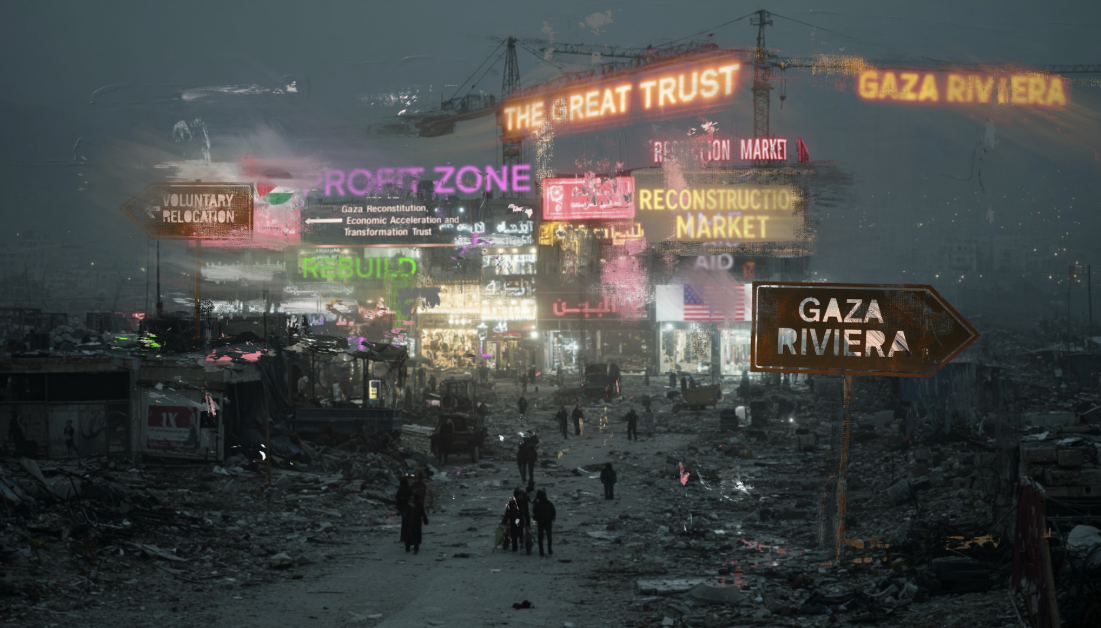
“The greatest and most prestigious board ever assembled at any time, any place.” The Board of Peace. To a colonialist, peace is the means by which conquest advances. When force no longer works, theft is legitimized by foreign administration for the good of the people. A colonial peace is one in which injustice becomes the status quo, enshrined in prestigious boards and validated by the complicity of participating world leaders.
Norman Harman is a Scottish artist and early pioneer of POSTPAINTING — a practice that collides analogue painting with AI and digital systems to probe distortion, control, and aesthetic entropy in the 21st century.
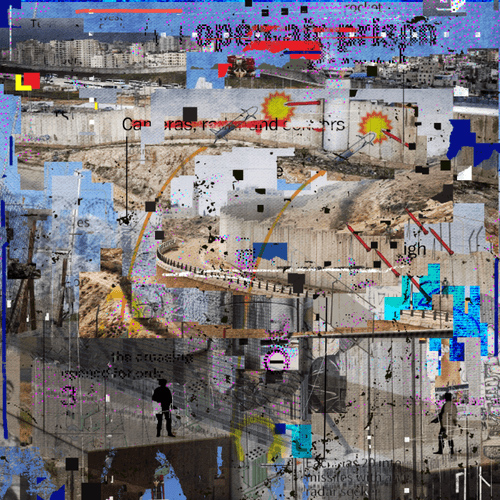
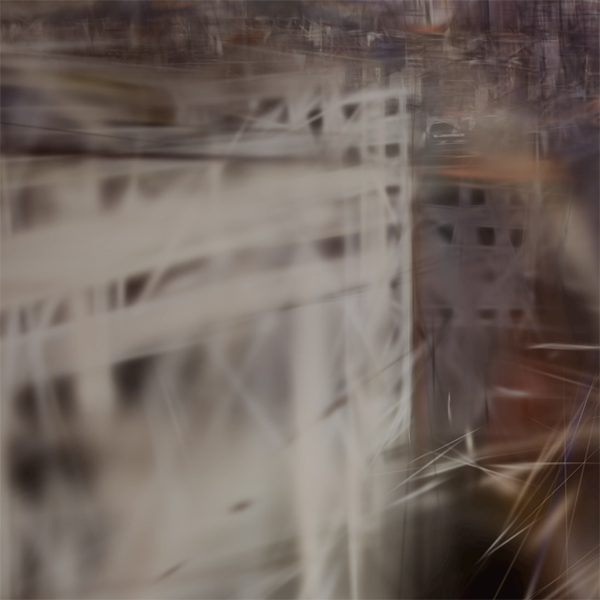
Born in Edinburgh, Harman trained in Painting at Edinburgh College of Art (1997–2001), where he received the RSA Latimer Painting Prize. His work begins where signals break down: overpainted digital images are fractured, glitched, and rebuilt by hand — painterly reconstructions of corrupted data that hover between figuration and abstraction, reality and simulation.
Recent projects include Android Plaza and LOWEKCHO, an expansive ongoing series chronicling a fictional dystopia consumed by biotech, ecological collapse, and late-capitalist absurdity. Fusing AI-generated world-building with digital painting, the series is released as 1/1 NFTs on-chain.
His digital paintings have recently been exhibited in Berlin, London, and Paris, including Paris Photo 2025 with L'Avant Galerie Vossen.
Harman has also collaborated with Irvine Welsh on a cinematic short for Message From The Skies (Edinburgh), and is one half of The Last Confirmation, an ongoing crypto art duo with Robness. His work is collected across both traditional and blockchain-native contexts, placing him in the first wave of artists using Web3 to reinvent how art is made, distributed, and preserved.

“Infinite Fiat Money for Never Ending Injustices” is a piece from Carlos Marcial’s Fiat est Violentiam digital art series, a body of work that uses currency as both image and indictment. In this piece, the Israeli new shekel, a symbol of state issued fiat money, is used to skin a military Humvee, transforming an object associated with defense into a charged emblem of economic and military aggression.
The work reflects on the disturbing ease with which fiat money, created without a hard supply limit and detached from material backing, can sustain war, occupation, and injustice. Focusing on the ongoing violence in Palestine, Marcial connects the abstraction of monetary systems to the very real consequences they produce: displaced families, militarized territories, and children forced to live under the weight of decisions made far from them.
Through this digital artwork, the artist confronts the idea of endless war financed by endless money. The piece stands as a visual petition for peace and justice, and as an urgent call for an end to the Israeli occupation of Palestinian territories and for the recognition of a free and sovereign Palestinian state. In doing so, it imagines liberation not as an abstract ideal, but as a necessary condition for dignity, stability, and a future beyond the cycles of violence.
Carlos Marcial (b. 1984) is a Mexican and Puerto Rican artist, designer, and coder working across 3D animation, digital sculpture, generative systems, and NFT-based media. Formed between San Juan and Mexico City, and educated in film, literature, and screen directing, Marcial brings a cinematic and deeply political sensibility to digital art.
Since discovering Bitcoin in 2012 and entering crypto art in 2019, he has developed a practice that explores money, memory, sovereignty, identity, and power. His work often reveals the violence hidden inside systems that are presented as normal, from fiat money and debt to colonial histories, technological control, and the politics of visibility. In works such as Fiat is Violence, Marcial confronts the real human consequences of economic abstraction, while his broader practice draws from Caribbean and Latin American histories of resistance, pride, and liberation.
Known for his Infinity Rooms and blockchain-native works such as The Blockchain is the Message and The 21 Million, Marcial uses code and digital imagery to create immersive visual experiences where beauty, critique, and memory coexist. His work does not treat the digital as an escape from the world, but as a way to face it, question it, and imagine something freer.
Norman Harman is a Scottish artist and early pioneer of POSTPAINTING — a practice that collides analogue painting with AI and digital systems to probe distortion, control, and aesthetic entropy in the 21st century.
Born in Edinburgh, Harman trained in Painting at Edinburgh College of Art (1997–2001), where he received the RSA Latimer Painting Prize. His work begins where signals break down: overpainted digital images are fractured, glitched, and rebuilt by hand — painterly reconstructions of corrupted data that hover between figuration and abstraction, reality and simulation.
Recent projects include Android Plaza and LOWEKCHO, an expansive ongoing series chronicling a fictional dystopia consumed by biotech, ecological collapse, and late-capitalist absurdity. Fusing AI-generated world-building with digital painting, the series is released as 1/1 NFTs on-chain.
His digital paintings have recently been exhibited in Berlin, London, and Paris, including Paris Photo 2025 with L'Avant Galerie Vossen.
Harman has also collaborated with Irvine Welsh on a cinematic short for Message From The Skies (Edinburgh), and is one half of The Last Confirmation, an ongoing crypto art duo with Robness. His work is collected across both traditional and blockchain-native contexts, placing him in the first wave of artists using Web3 to reinvent how art is made, distributed, and preserved.